
Harvest is on, the days are long, and the first cold mornings have arrived. If your back has started talking to you by mid-afternoon, you're in good company — around here, most people's bodies are the main piece of equipment they own, and it's the one that never gets serviced.
Farm and trade work is hard on backs for reasons that are specific and predictable. Understanding why makes the fixes obvious.
What this work actually does to you
Long hours in a seat that vibrates. Combine, tractor, truck, skid steer — whole-body vibration is genuinely fatiguing to the tissues around the spine, and it happens for ten or twelve hours at a stretch during harvest. You don't feel it happening. You feel it when you climb down.
Repetitive lifting, usually awkward. Not gym lifting where the weight is balanced and you're braced. Real lifting: a calf, a bale, a tool box out of the back of a truck, at whatever angle the job offers.
Sustained positions. Overhead for electricians, kneeling for plumbers, bent for mechanics. Muscle held in one position for hours gets no blood flow and no recovery.
Cold. Cold tissue is stiffer and less tolerant of sudden load. An Alberta morning in October is not a warm-up.
Add all four together across a season and the result isn't one injury — it's a back that's slowly getting tighter and less forgiving each week.
Five habits that actually help
1. Break the position before you have to
The damage from sitting or holding a position isn't from any one moment — it's from duration. Getting out of the seat for two minutes every hour does more than a long stretch at the end of the day. Set a phone timer during harvest if that's what it takes.
2. Warm up the first lift, not the tenth
The lift that hurts people is usually the first heavy one of a cold morning. A couple of minutes of movement before you start — walking, a few easy bends, getting some blood into the hips and back — costs nothing and prevents the classic "I just bent down and it went."
3. Keep the load close
Forget the "lift with your legs" poster. The variable that matters most is distance: the further a weight sits from your body, the more load goes through your lower back, and it multiplies fast. Hugging something awkward and heavy is safer than carrying it at arm's length, even if it feels less dignified.
4. Deal with it in season, not after
The most common thing we hear in the clinic is "it's been like this since spring." Tissue that's been tight for months takes longer to settle than tissue that's been tight for two weeks. A treatment during harvest is worth two after it.
5. Sleep is the actual recovery
Everything else supports it. During a heavy stretch, sleep is the thing that gets sacrificed first and matters most. If you're getting five hours through harvest, no amount of stretching compensates.
When it's more than soreness
General ache after a hard day is normal. These aren't, and they're worth getting assessed by your physician rather than worked on:
- Pain that travels down a leg, particularly past the knee
- Numbness, tingling or weakness in a leg or foot
- Pain after a specific incident — a fall, a slip off equipment, something that let go
- Pain that wakes you at night or is worse in the morning than at the end of the day
- Any change in bladder or bowel function alongside back pain — that's urgent
Massage therapy helps a body that's working hard. It doesn't diagnose, and it isn't the right first step for any of the above.
What treatment does for this kind of work
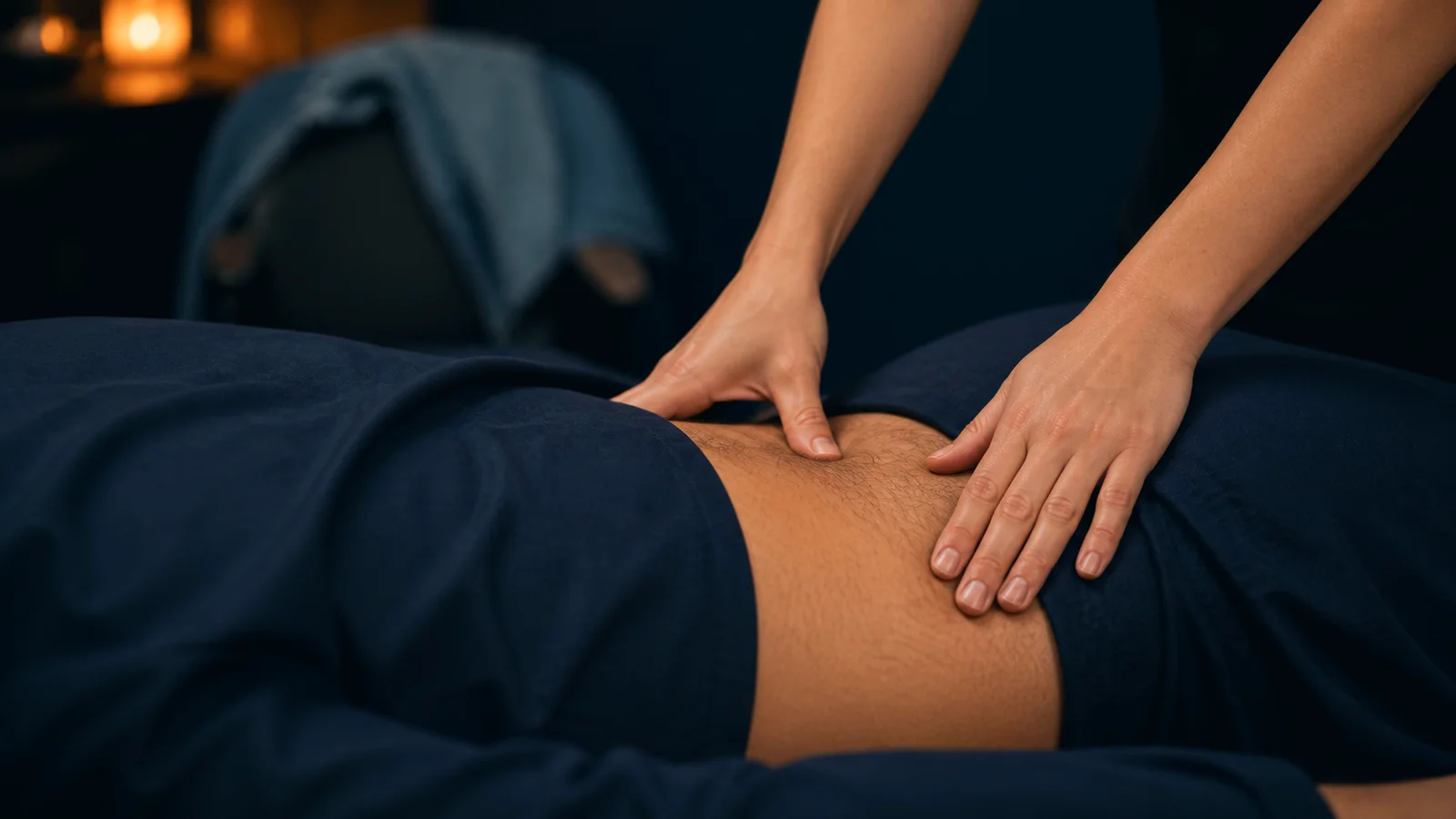
For a back that's simply been asked too much, hands-on work does something specific: it addresses the tightness through the hips, low back and shoulders before it starts changing how you move — because once you're compensating, other things start hurting too.
Deep tissue and therapeutic massage is the usual starting point. Where tissue has become genuinely ropey or an old injury site never settled, Graston Technique reaches what hands can't. For tendon complaints and stubborn inflammation, laser therapy is available with Tracy and pairs well with either.
Most people doing physical work do best on maintenance rather than crisis treatment — every three or four weeks through the heavy months, more often when something's flaring.
Booking around a work schedule
We're open Monday to Saturday, 10am to 7pm by appointment, which covers evenings after the day is done and Saturdays for anyone working away through the week. Direct billing is available with most major insurers, so for a lot of people the visit costs little or nothing out of pocket.
We're on 50 Avenue in Olds, an easy run from Didsbury, Carstairs, Bowden, Sundre, Innisfail and Three Hills. Book online or call (587) 581-7176 — you'll reach the owner directly.